LLM Vision
valentinfrlch
On Home Assistant 2026.11 or newer? Open it in the Marketplace
- Installs
- 7.8k sharing analytics
- GitHub stars
- 1.5k
- Connection
- Uses the vendor's cloud
- Upkeep
- Updated in the last 6 months
- Version
- v1.7.2,
- Category
- AI and voice, AI models
- Kind
- Marketplace integration
- Needs
- Needs the Marketplace (HACS on 2026.10 and older)
- Domain
llmvision- Issues
- Report an issue
Independent directory, made by the developer of Vulpo. Not affiliated with Home Assistant or the Open Home Foundation.
Screenshots From the README of valentinfrlch/ha-llmvision.
About
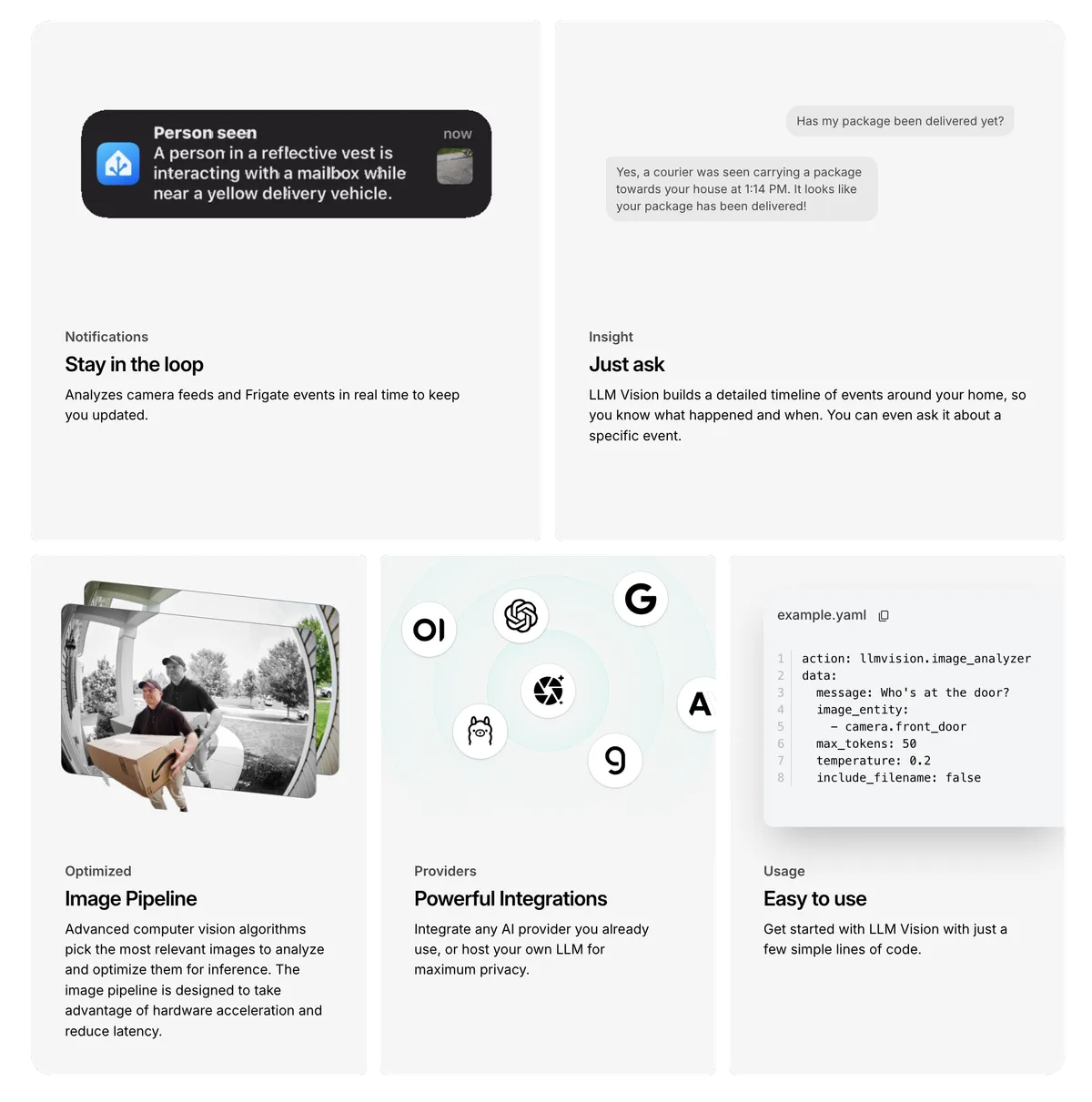
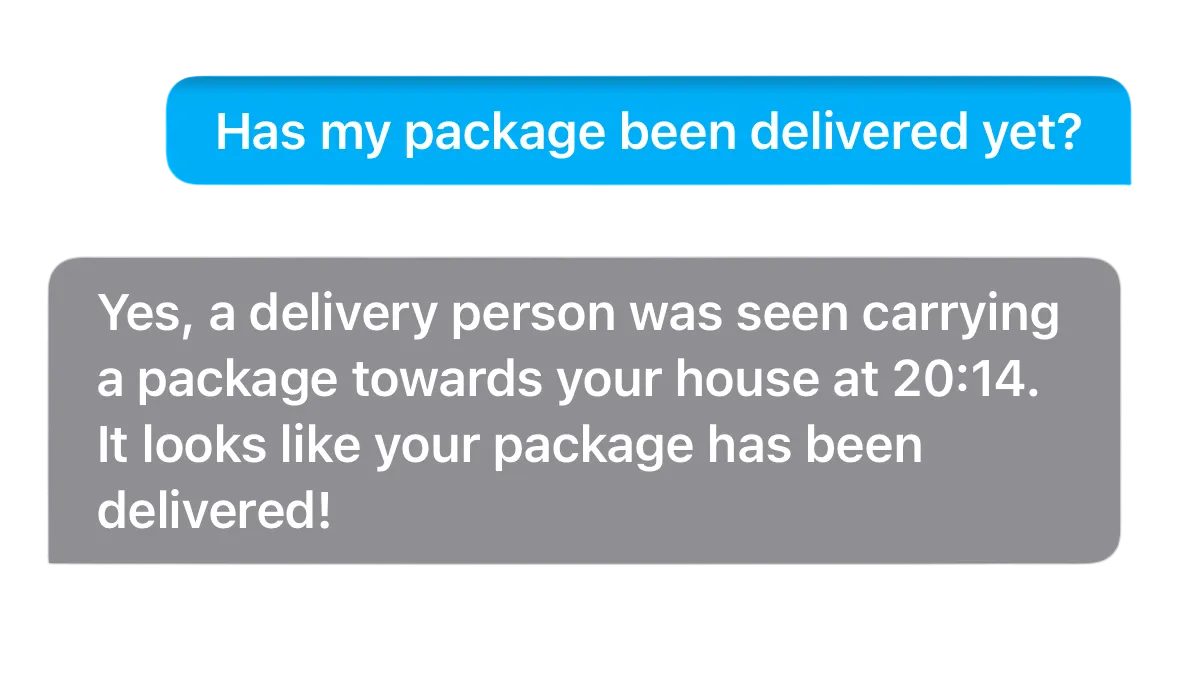
LLM Vision is an integration that uses multimodal language models to analyze images, videos, camera feeds and Frigate events. It answers questions about that media and writes descriptions based on a prompt, and it can update sensors with data extracted from streams, images or videos. It keeps a timeline of analyzed camera events, which appears in a calendar and can be shown on a dashboard with an optional Timeline Card or asked about through Assist. It also remembers people, pets and objects, and a blueprint can send camera event notifications summarized by AI. Providers include OpenAI, Anthropic, Google Gemini, Azure, Groq, Ollama, LocalAI and custom OpenAI-compatible endpoints, each with settings such as default model, temperature and top P. It is added through the Home Assistant interface, and the listing notes it depends on the vendor's cloud.
Automatic summary of the README and code of valentinfrlch/ha-llmvision. Something wrong, or are you the maintainer and want your own text here? Get in touch
Supports
Uses the vendor's cloud Needs an internet connection and an account with the vendor.
From the Marketplace Installed through the Marketplace, formerly HACS.
Actively maintained Its author released or pushed a change in the last six months.
Provides
- Calendars
Setting it up
Install it from the Marketplace and restart Home Assistant, then add it under Settings, Devices and services.
Connect to your LocalAI server
- IP address
- Port
- HTTPSUse HTTPS for secure connections
- Default modelThe default model to use when no other model is specified.
- TemperatureControls the randomness of the output. Lower values make the output more deterministic.
- Top PControls the diversity of the output. Lower values make the output more focused.
Configure Ollama
- IP address
- Port
- HTTPSUse HTTPS for secure connections
- Default modelThe default model to use when no other model is specified.
- TemperatureControls the randomness of the output. Lower values make the output more deterministic.
- Top PControls the diversity of the output. Lower values make the output more focused.
- ThinkEnable thinking mode for models that support it.
- Context lengthSets the size of the context window used to generate the next token.
- Keep aliveControls how long the model will stay loaded into memory following the request. Default: 5m (5 minutes), -1: keep in memory indefinitely, 0: unload immediately
Configure OpenAI
- API keyMake sure to add credit to your OpenAI account.
- Default modelThe default model to use when no other model is specified.
- TemperatureControls the randomness of the output. Lower values make the output more deterministic.
- Top PControls the diversity of the output. Lower values make the output more focused.
- Reasoning effortControls the reasoning effort for models that support it. None disables thinking.
Configure Azure
- API key
- Base URL
- Deployment
- API Version
- Default modelThe default model to use when no other model is specified.
- TemperatureControls the randomness of the output. Lower values make the output more deterministic.
- Top PControls the diversity of the output. Lower values make the output more focused.
Configure Anthropic Claude
- API keyMake sure to add credit to your Anthropic account.
- Default modelThe default model to use when no other model is specified.
- TemperatureControls the randomness of the output. Lower values make the output more deterministic.
- Top PControls the diversity of the output. Lower values make the output more focused.
- Thinking budgetControls the thinking budget for models that support it. Higher values allow for more complex reasoning but may increase response time and cost. 0 disables thinking.
Configure Google Gemini
- API key
- Default modelThe default model to use when no other model is specified.
- TemperatureControls the randomness of the output. Lower values make the output more deterministic.
- Top PControls the diversity of the output. Lower values make the output more focused.
- Thinking budgetControls the thinking budget for models that support it. Higher values allow for more complex reasoning but may increase response time and cost.
Configure Groq
- API key
- Default modelThe default model to use when no other model is specified.
- TemperatureControls the randomness of the output. Lower values make the output more deterministic.
- Top PControls the diversity of the output. Lower values make the output more focused.
Configure Custom OpenAI provider
- Custom Endpoint
- API keyAPI key or 'openai', if none is required.
- Default modelThe default model to use when no other model is specified.
- TemperatureControls the randomness of the output. Lower values make the output more deterministic.
- Top PControls the diversity of the output. Lower values make the output more focused.
Texts from the code of valentinfrlch/ha-llmvision.
From the README
- Supports OpenRouter, OpenAI, Anthropic, Google Gemini, AWS Bedrock, Azure, Groq, Ollama, Open WebUI, LocalAI and any provider with OpenAI compatible endpoints.
- Answers questions and provides descriptions of images, video files, live camera feeds, and Frigate events based on your prompt.
- Remembers people, pets and objects
- Keeps a timeline of camera events, so you can display them on your dashboard or ask Assist about them.
- Seamlessly updates sensors based on data extracted from camera streams, images or videos

Shows in Vulpo
Calendar card.Information
- Installs
- 7.8k sharing analytics
- GitHub stars
- 1.5k
- Connection
- Uses the vendor's cloud
- Upkeep
- Updated in the last 6 months
- Version
- v1.7.2,
- Category
- AI and voice, AI models
- Kind
- Marketplace integration
- Needs
- Needs the Marketplace (HACS on 2026.10 and older)
- Domain
llmvision- Issues
- Report an issue